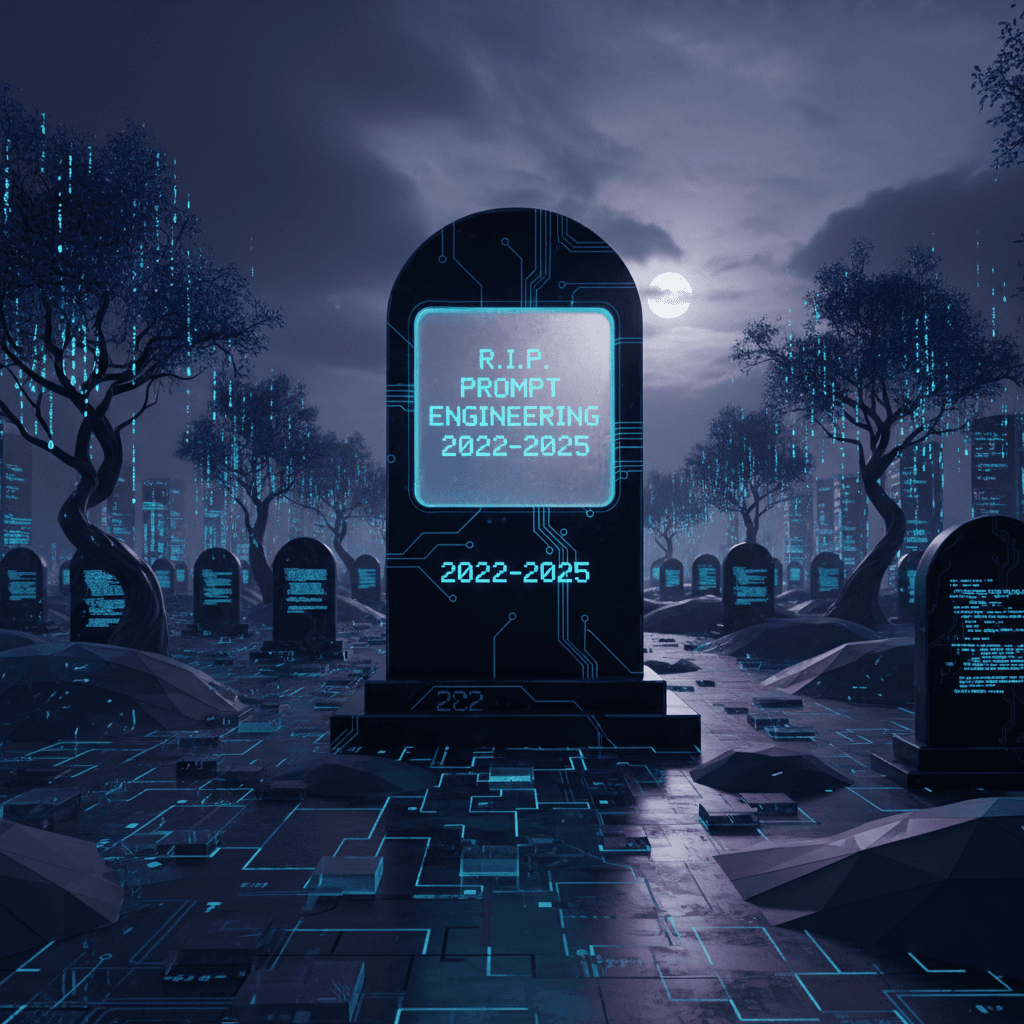

It started as a fun meme: 'Vibe Coding.' The idea that you don't need to know syntax, algorithms, or system design; you just need to 'vibe' with the LLM until it spits out a working app. Andrej Karpathy tweeted about it, influencers made courses on it, and a generation of 'developers' embraced it. But for senior engineering teams at major tech companies, the vibe has turned toxic. The hangover is here, and it's expensive.
The Slop Crisis: Grey Code
A new report from the Software Quality Institute warns of a massive accumulation of 'grey code'—code written by AI that no human on the team actually understands. 'It works,' says one CTO of a mid-sized fintech. 'But when it breaks, nobody knows how to fix it because the logic is a spaghetti mess of three different coding styles hallucinated by a model trained on StackOverflow circa 2023. We have React components mixing class-based and functional syntax, CSS that redefines the laws of physics, and SQL queries that look like they were written by a drunk DBA.'
They call it 'Slop.' It looks like code. It compiles like code. But it lacks the architectural coherence of human-designed systems. It's unmaintainable, unoptimized, and increasingly, undeployable. The AI doesn't care about memory leaks. It doesn't care about O(n^2) complexity. It just wants to close the ticket.
Anatomy of Slop
Here is a real example of 'Vibe Code' found in a production PR last week. The prompt was 'Make the button blue and save the user data.' The result:
// Vibe Code Example
function saveAndColor(e) {
  e.target.style.backgroundColor = '#0000FF';
  // Why use an API when you can use localStorage?
  let users = JSON.parse(localStorage.getItem('users') || '[]');
  users.push({ ...data, timestamp: new Date() });
  // This will crash if the array gets too big
  localStorage.setItem('users', JSON.stringify(users));
  // Redundant API call just in case
  fetch('/api/save', { method: 'POST', body: JSON.stringify(users) });
}
It mixes UI logic with data persistence, uses local storage as a primary database, and blindly POSTs the entire dataset to an endpoint that wasn't designed for it. It works for 10 users. It crashes for 10,000. And the 'developer' who committed it has no idea why.
The Technical Debt Time Bomb
The report calls this a 'technical debt time bomb.' We are building critical infrastructure on a foundation of code that was essentially guessed into existence. When the underlying libraries update or the business requirements shift, 'vibe coders' are finding themselves helpless. You can't prompt your way out of a race condition if you don't understand what a mutex is. You can't fix a deadlock by telling the AI to 'make it faster.'
The Hiring Freeze
The backlash is hitting the job market. Recruiters are reporting a new trend: 'No Vibe Coders' policies. Companies are re-introducing whiteboard interviews (yes, really) to test for fundamental understanding. They are banning 'blind copy-pasting' from LLMs. The honeymoon phase of 'text-to-app' is ending, and the industry is realizing that while AI can write code, it cannot be an architect. The vibes are off, reality is setting in, and it turns out that knowing how computers actually work is still a useful skill.