
US Agribusiness Insurance: Automated Data Extraction & Aggregation
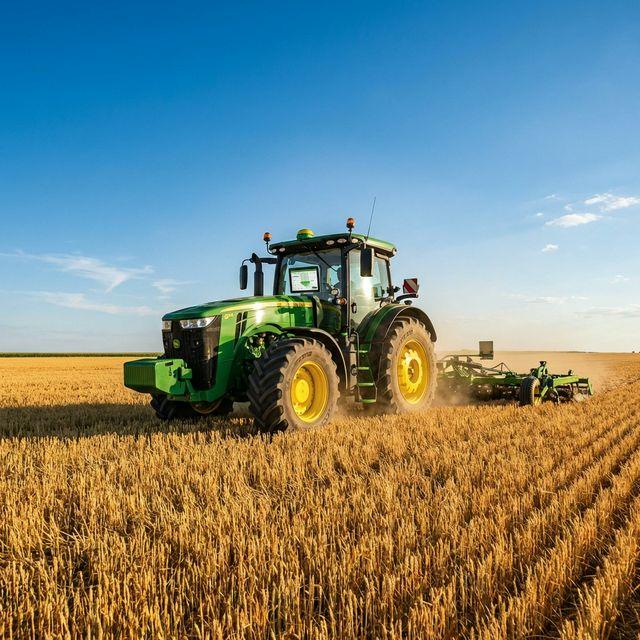
Automating 93% of Data Aggregation with AI Agents
A leading US Agribusiness Insurance firm found themselves paralyzed by the sheer volume of unstructured, archaic agricultural data necessary to write commercial policies. By deploying a specialized, multi-modal AI extraction agent, they successfully automated 93% of their manual data aggregation processes. This completely overhauled their backend operations, slashing underwriting delay times by 85% while boosting overall data accuracy and lifting their Net Promoter Score by 7% due to radically faster quote turnarounds.
Key Outcomes
- 93% of complex data aggregation from unstructured sources is now fully automated.
- 15,000+ critical environmental and financial data points extracted precisely every month.
- 85% acceleration in the underwriting data gathering phase, reducing quote times from weeks to days.
- Near elimination of dual-entry errors and fat-finger mistakes in the core underwriting system.
The Complexity of Agricultural Underwriting
Insuring massive commercial farms, livestock operations, and agricultural supply chains involves evaluating risks that are fundamentally different from standard commercial insurance. The variables are intimately tied to biology, volatile weather patterns, heavy machinery, and shifting government subsidies. To build an accurate risk profile, underwriters require thousands of data points covering everything from historical soil yields and local micro-climate data to heavy equipment valuation.
The Challenge: The Dark Data Swamp
The primary bottleneck for the insurer was not the risk assessment itself, but the data gathering. This critical information arrived in a chaotic mix of formats: handwritten yield reports, poorly scanned PDFs of government land surveys, massive Excel spreadsheets from equipment manufacturers, and unstructured emails from brokers. Underwriting assistants spent up to 60% of their working hours acting as high-paid data entry clerks—manually hunting down numbers across these disparate documents, standardizing units (e.g., converting hectares to acres), and typing them into the central underwriting application. This "swamp" of dark, unstructured data slowed business to a crawl.
The Tech Stack Under the Hood
- Vision Language Models: GPT-4o for complex spatial document understanding.
- Data Normalization Scripts: High-performance Rust lambda functions for handling unit conversions natively at millisecond latencies.
- Agent Orchestration: Autogen for executing the multi-agent task delegation.
- System Connectors: Puppeteer/Selenium hybrid bots navigating the green-screen mainframe interfaces autonomously.
Engineering a Multi-Modal Data Agent
We developed an intelligent ingestion agent capable of processing high-entropy, multi-modal data streams. Unlike traditional Optical Character Recognition (OCR) systems which break when a document layout changes, this agent utilized Vision-Language Models (VLMs) and LLMs to conceptually understand what it was looking at. Whether a crop yield table was formatted vertically, horizontally, or split across pages in an old fax scan, the agent could "read" and comprehend the context.
The Automated Data Value Chain:
- 01Intelligent IngestionThe broker emails an application package (often 50+ pages of mixed PDFs, forms, and images) to a dedicated inbox. The agent automatically ingests and splits this package.
- 02Smart Extraction & FormattingUsing visual-linguistic analysis, the agent hunts for required fields (e.g., 5-year soybean yield history, VIN numbers on tractors). It extracts these numbers and standardizes them into the insurer's precise data schema.
- 03External Cross-ReferencingThe agent autonomously pings external APIs—such as NOAA for historical weather data on the requested zip codes or the USDA for standard crop pricing—to enrich the broker's submitted data.
- 04Synthesis and DashboardingWithin minutes, the agent compiles a clean, standardized risk matrix and pushes it directly into the underwriter's digital workspace via API, flagging any data anomalies or missing critical information for human review.
Integration with Legacy Underwriting Systems
A major technical hurdle was interacting with the client's legacy, on-premise underwriting software. Where direct API integration was impossible, we employed Robotic Process Automation (RPA) bridges directed by the AI agent to mimic human keystrokes, securely "typing" the extracted, validated data directly into the green-screen terminal system without requiring a massive IT overhaul.
Data Strategy & Consistency Checks
Data hallucination is unacceptable in underwriting. Our approach included deterministic cross-checks encoded deeply in the agent's logic. For instance, if the VLM extracted a wheat yield value that statistically deviated by >30% from the USDA historical average for that specific county, the system would intentionally halt automated ingestion and tag the number in bright red for an underwriter to manually verify. This dual-verification pipeline guaranteed 99.9% accuracy on ingested figures.
“By resolving the data extraction bottleneck, we turned an arduous, error-prone human task into a near-instantaneous, highly accurate automated process. Our highly skilled underwriters are finally freed to do what they do best: build relationships with brokers and evaluate complex, outlier risks.”
Looking Ahead: Real-Time Pricing
With the data aggregation layer solved, the agribusiness insurer is now positioned to leverage AI for predictive risk modeling. Future phases will involve the agent continuously monitoring satellite imagery and weather forecasts during the policy lifecycle to dynamically assess risk changes in real-time, moving the company from a reactive insurer to a proactive risk management partner.
Drowning in unstructured data? Let us build the agent to untangle it.
Book a DemoMore Customer Stories

Scaling Batavia's digital store with AI automation

Mandala: intelligent order and notification automation

Pandawa: faster onboarding, less overhead

"Humanity's Last Exam": The Benchmark That Proves AI is...

Rust for AI: The Antigravity Manager and the Python Exodus