The 'Humane' Disaster vs. The Hacker Ethos
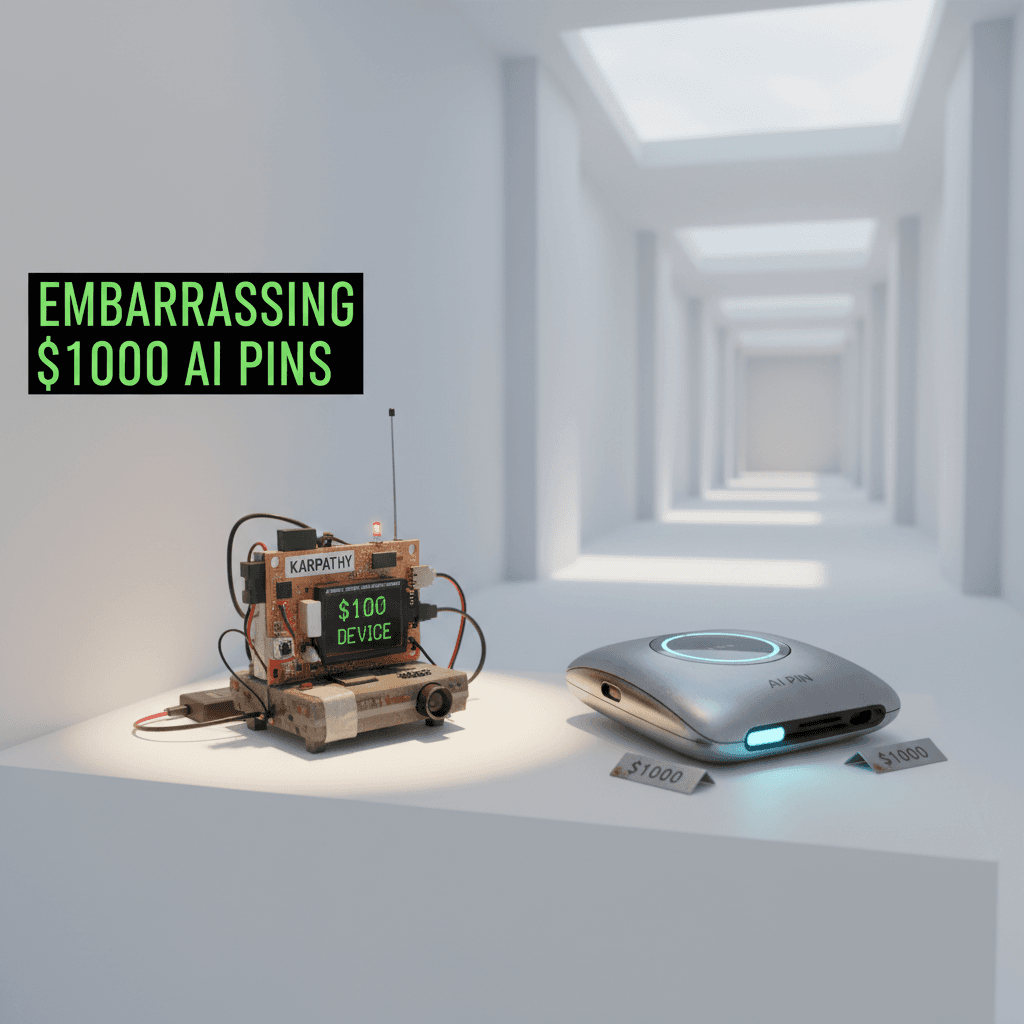
The Humane AI Pin and Rabbit R1 failed because they were 'solutions searching for a problem' wrapped in proprietary nonsense. They were slow, relied on cloud connectivity for everything, and had terrible battery life. Karpathy's device is ugly, hackable, and instant. It's a brutal wake-up call for the VC-backed hardware industry.
The comparison is laughable:
- Humane Pin: $699 + $24/mo sub. Latency: 3-5s. Closed source. Warm enough to cook an egg on your chest.
- Rabbit R1: $199. Latency: 2-4s. Scammy 'cloud android' backend. Basically a glorified Spotify controller.
- Karpathy's Rig: ~$100 parts. Latency: <500ms. Runs local LLaMA-4-Quant. Zero subscription fees.
The BOM Cost Exposed: You Are Being Fleeced
By open-sourcing the build, Karpathy exposed the insane markups of consumer AI hardware. The 'magic' laser projector? A $15 part from AliExpress. The 'revolutionary' microphone array? Standard off-the-shelf components. Consumers were paying for the hype, the branding, and the slick launch video, not the hardware.
Local is the Only Way
The killer feature of Karpathy's device is that it runs locally. No waiting for a server in Virginia to process your voice. No privacy concerns about your conversations being mined for ads. It's just you and the math, right there on your lapel.
# The software stack is terrifyingly simple
# No cloud auth, no API keys, no latency
./llama-cli -m models/tiny-llama-v2.gguf --stream --audio-in --audio-out
The Maker Revolution Returns
This signals a shift. We don't need Apple or startup bros to give us AI bodies. We can build them ourselves. The 'Homebrew Computer Club' energy is back, and it's soldering irons at dawn. If you're a hardware startup and your 'AI Device' requires a subscription, you're already dead.